

Composite vs. Pressure-Treated Decking for a Bismarck Deck
If you're planning a new deck or replacing an old one, you'll run into this decision pretty quickly: composite or pressure-treated lumber? It's one of the most common questions I get, and the honest answer is that there's no universal right choice. It comes down to your budget, your willingness to maintain it, and how long you plan to stay in your home.
Here's a straightforward breakdown of both options — with Bismarck's climate in mind, because it matters more than most people realize.
Why Bismarck's weather is harder on decks than you might think
We don't get the humidity that rots decks in the South, but we more than make up for it with freeze-thaw cycles. Water gets into wood, freezes, expands, and works its way deeper with every cycle. Over time, that process cracks boards, loosens fasteners, and accelerates rot — especially at posts and anywhere wood contacts the ground or holds standing water.
Any decking material you choose has to contend with that reality. Some handle it better than others.
Pressure-treated lumber
Pressure-treated lumber has been the default decking material for decades, and for good reason. It's widely available, significantly less expensive upfront, and when properly maintained it holds up well in northern climates.
The tradeoff is maintenance. To get the most out of a pressure-treated deck in Bismarck, you're looking at cleaning and resealing every two to three years — more if you want to keep it looking sharp. Skip that routine and you'll start to see graying, cracking, and eventually rot, particularly at the end grain of boards and anywhere moisture tends to collect.
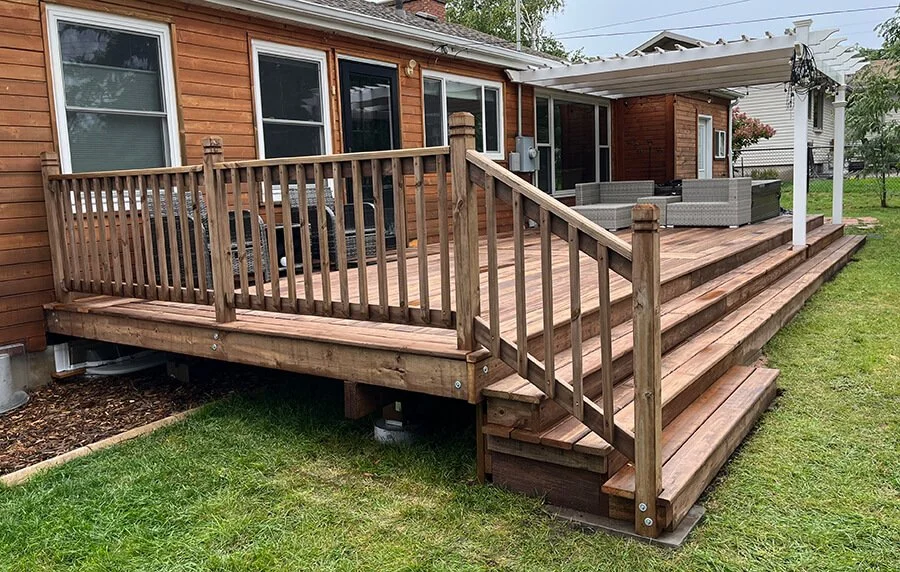
Pressure-treated wood deck construction in Bismarck using hidden fasteners
Hidden fasteners, installed at an angle from the side of decking boards can reduce water entry into the wood and extend the life of a pressure-treated deck. The product I use for this is the Camo Marksman Pro.
Pressure-treated lumber can be prone to some warping and checking as it dries after installation, which is normal but worth knowing going in. Allowing for proper spacing between boards helps manage this.
Best fit for: Homeowners who want a quality deck at a lower upfront cost and are willing to put in periodic maintenance to protect that investment.
Composite decking
Composite decking — brands like Trex, TimberTech, Fiberon and UltraDeck are among the most common — is made from a blend of wood fiber and plastic. It doesn't rot, it doesn't need sealing, and it handles Bismarck's freeze-thaw cycles without the same cracking and checking you may see in natural wood.
The appeal is low maintenance. Sweep it off, rinse it down occasionally, and it looks good for years with minimal effort. Most quality composite products also come with warranties in the 25-30 year range, which says something about how manufacturers expect them to perform.
The catch is upfront cost. Composite decking typically runs two to three times the material cost of pressure-treated lumber, and that gap adds up quickly on a larger deck. It's a real number, and it's worth being honest about.
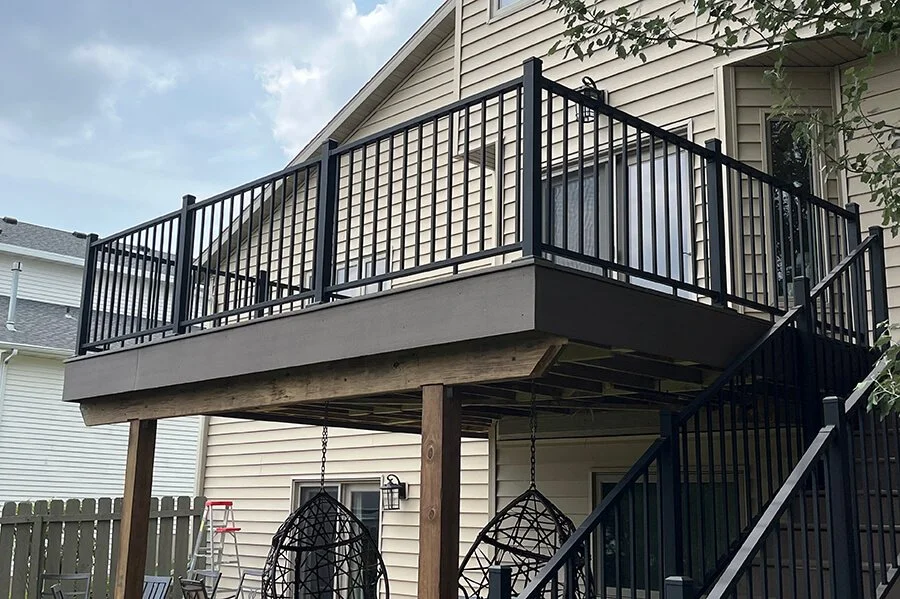
Deck construction in Bismarck using composite decking and metal railing
One other note: composite decking still requires pressure-treated framing underneath. The decking surface is composite; the structure supporting it is not. That framing still needs to be done right and maintained over time.
Best fit for: Homeowners who want a low-maintenance deck and plan to be in their home long enough to recoup the upfront investment — or who simply don't want to think about it every couple of years.
| Pressure-Treated | Composite | |
|---|---|---|
| Upfront cost | Lower | Higher |
| Maintenance | Every 2–3 years | Minimal |
| Freeze-thaw performance | Good if maintained | Excellent |
| Lifespan | 15–25 years | 25–30+ years |
| Appearance over time | Grays without sealing | Holds color well |
So which one should you choose?
If budget is the primary factor, pressure-treated is a perfectly sound choice — as long as you go in knowing that maintenance is part of the deal. If you'd rather pay more now and less attention later, composite is hard to argue with, especially given how our winters treat unprotected wood.
Either way, the material choice is only part of the equation. How the deck is built — proper footings, correct post location and anchoring, appropriate joist size and placement — matters just as much as what's on top. A well-built pressure-treated deck will outlast a poorly built composite one every time.
If you're weighing options for a deck project in the Bismarck or Mandan area, I'm happy to talk through what makes sense for your situation. Reach out for a free estimate.